Bolonia: Baelo Claudia, the beach and the dune
3 h · 9 stops
© Christian Hergesell
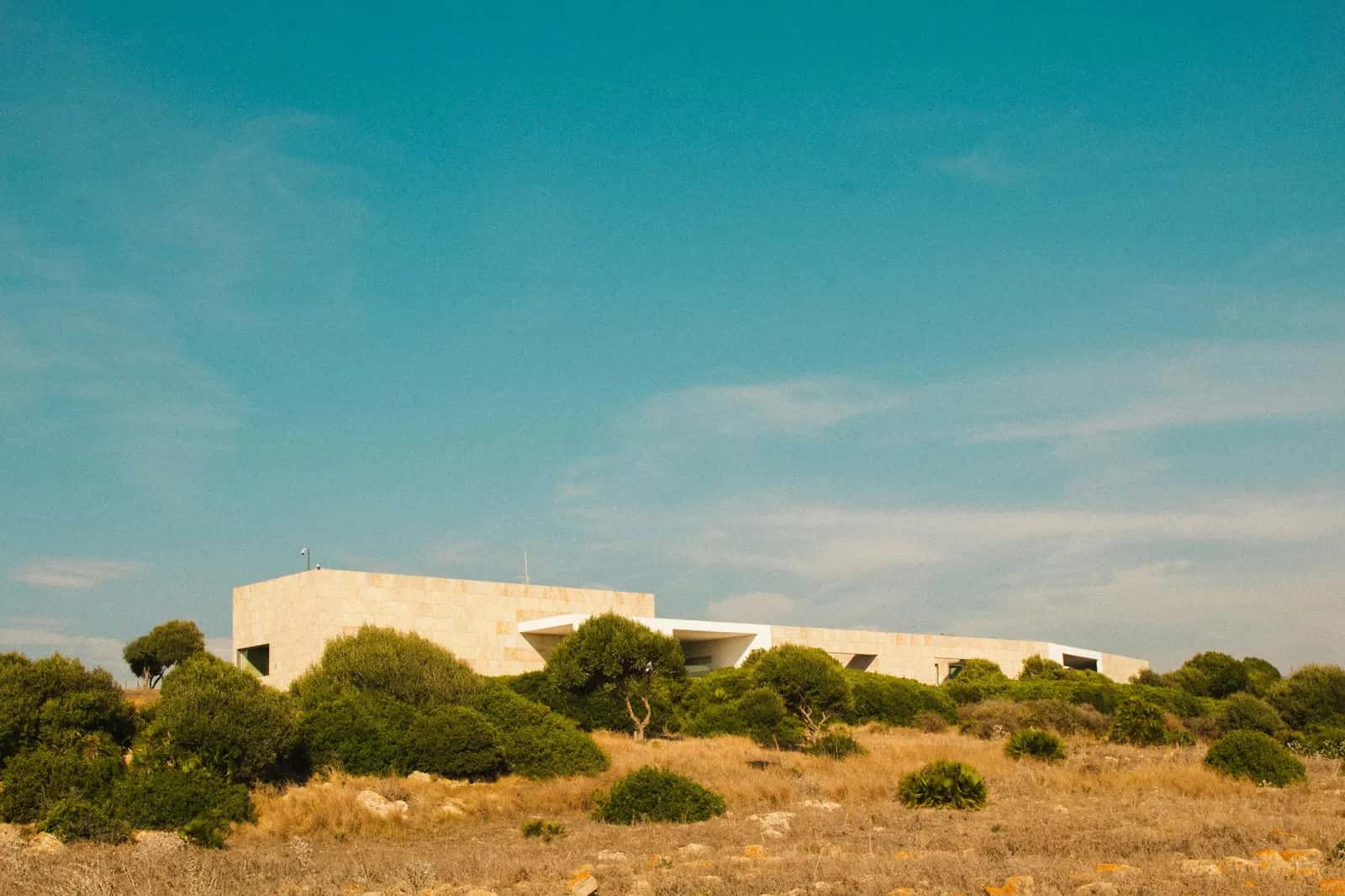 Next stop
Baelo Claudia visitor centre
Stop 1 of 9© Miguel Bernardo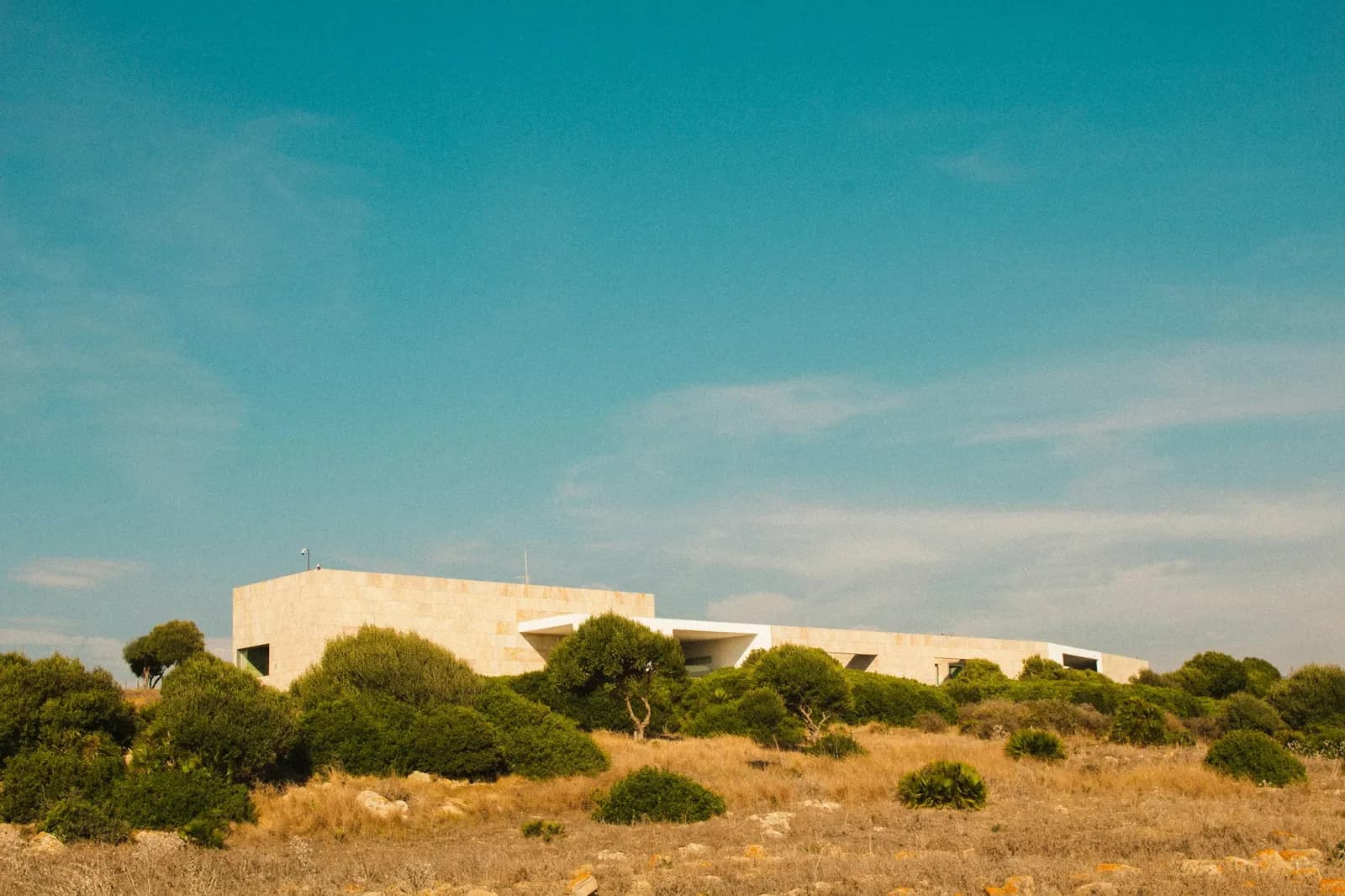
Baelo Claudia visitor centre
No audio for this stop
The line joins the stops in order. It doesn't trace the path street by street.
The walk
Coastal walk
First the Roman town, then the official Duna de Bolonia trail (1.1 km, 30 minutes, easy) over boardwalks and sand to the viewpoint, and finally the dune. You walk back along the shore. There is almost no shade: bring water, a hat and, in an easterly wind, something to keep the sand off. Note: since 22 September 2026 the Junta de Andalucía has kept the section of the trail between the archaeological site and the viewpoint closed; while that lasts, walk that part on the beach. Check the trail status and Baelo Claudia's opening times before you go.
- Time3 h
- Distance4.5 km
- DifficultyEasy
- Stops9
Stops
© Miguel Bernardo 1. Baelo Claudia visitor centre
The visit starts at the museum building above the bay. Baelo Claudia was founded in the late 2nd century BC and lived off trade with North Africa, fishing and salted fish. Emperor Claudius granted it the status of municipium; excavations began in 1917.
2. Forum, basilica and temples
The forum still has its original 1st-century paving. On one side is the basilica, which served as a law court and was presided over by a statue of Emperor Trajan more than three metres tall; on the other, raised up, stand the three temples of Jupiter, Juno and Minerva and, beside them, the temple of Isis.
3. Roman theatre
This is the largest building in Baelo, with room for around 2,000 people, and it uses the slope of the hillside for its seating. From the top the whole town makes sense: the wall, the street grid and the sea beyond.
4. Fish-salting factory
The vats you see were used to salt tuna and make garum, the fish sauce that made the town rich. The work was mostly done in summer, by seasonal labourers. Decline set in from the second half of the 2nd century, with an earthquake and tsunami, and Baelo was abandoned in the 7th century.
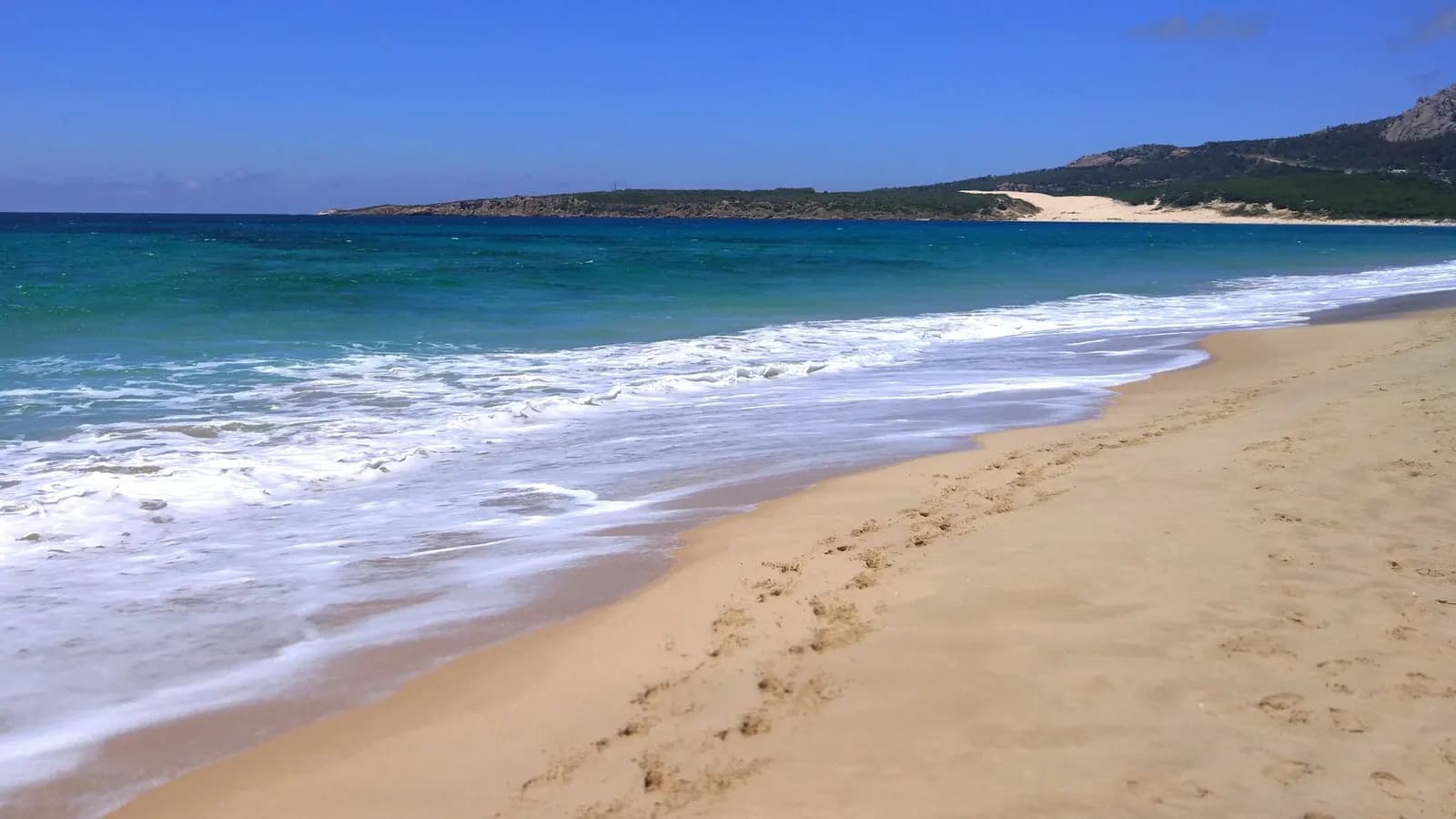
© Alejandro Martin 5. Start of the Duna de Bolonia trail
Just past the bridge over the Alpariate stream there is a small car park and, at the far end, the trailhead board and the wooden boardwalk. Here the stream forms a coastal lagoon where you can spot waders such as sandpipers and turnstones. The official trail is 1.1 km long and easy.
6. Old fishing hamlet
The first stretch of boardwalk ends here. You are level with Bolonia's old fishing hamlet, whose residents were rehoused in El Lentiscal in the 1970s so that the Roman town could be excavated. From this point the trail continues over the sand, in front of the ruins.
7. Second boardwalk, in front of the ruins
The second stretch of boards, about 400 metres long, which heads towards the pine wood. Marram grass, sea holly and sea daffodil grow in the sand. This is the section affected by the partial closure in force since September 2026: if the boardwalk is blocked, walk along the beach without stepping on the plants.
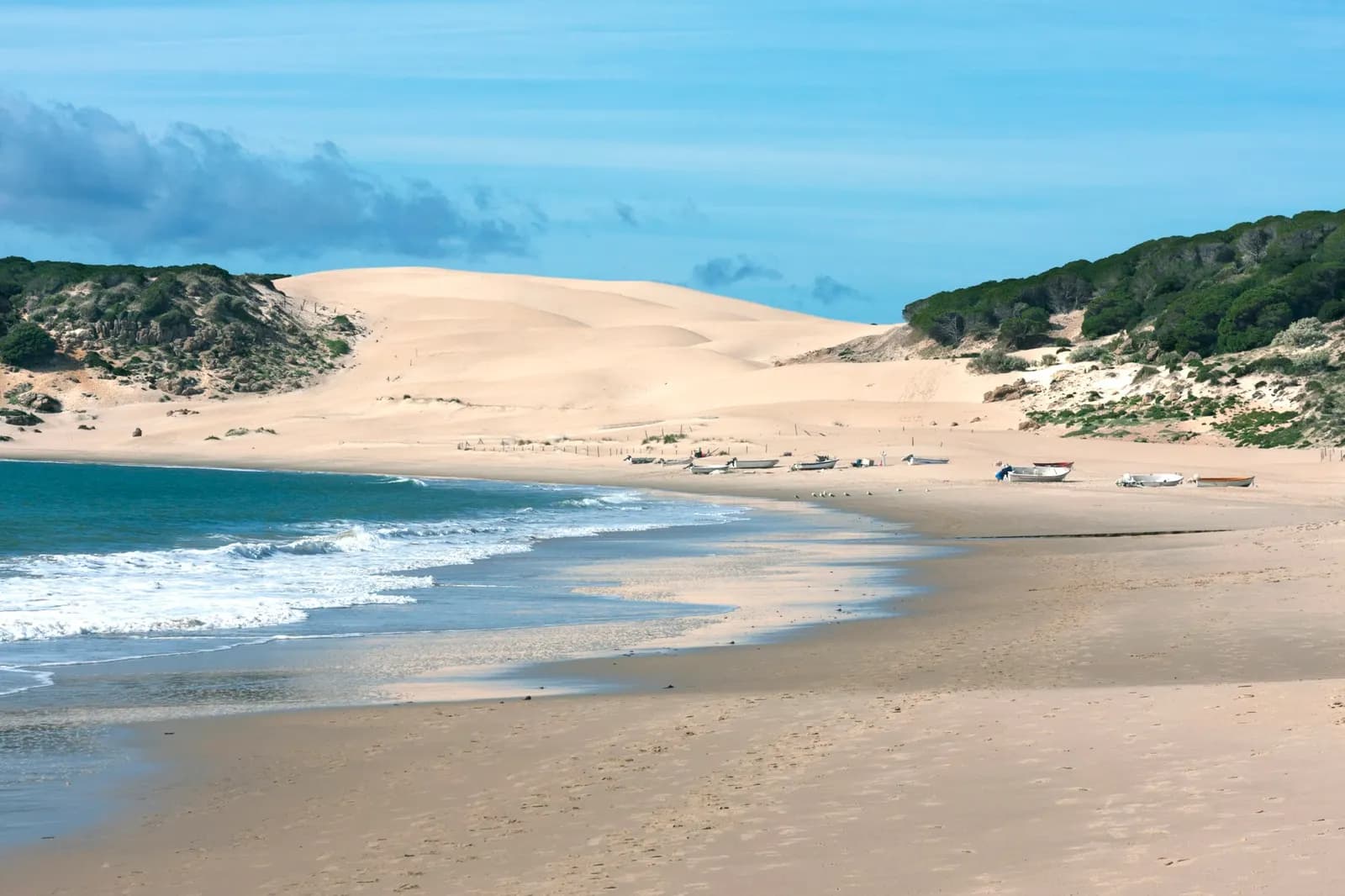
© Quino Al 8. Duna de Bolonia viewpoint
The end of the official trail: a wooden viewing platform at the edge of the pine wood, with the beach on one side and the dune on the other. You cannot continue through the pines because it is a restricted Ministry of Defence area. The stone pines of Monte Camarinal were planted to hold back the advancing sand.
9. Bolonia dune
More than 30 metres high and about 200 wide: this is the largest dune in the province and has been a natural monument since 2001. It is built by the levante, the easterly wind, which sweeps the beach and drops the sand where the bay closes. If you climb it, keep to the bare sand and take your time coming down; the wind hits hard at the top.