Practical info
The wind in Tarifa: levante and poniente
© Christian Hergesell
Two winds rule the Strait. Knowing which one is blowing tells you which beach to pick, whether the ferry will sail and what the sea will be like.
Why it is so windy here
The Strait of Gibraltar is a funnel between two seas and two continents, and the air speeds up as it squeezes through. The two prevailing winds are the levante (from the east) and the poniente (from the west).
Levante
- It blows from the east, off the Mediterranean. It arises from the contrast between low pressure over North Africa and the Azores high, and the Strait intensifies it.
- It can blow at any time of year but is most common from May to October.
- In the Strait it easily reaches 20–40 knots, and the strongest gusts occur on the western side, which means Tarifa.
- On the Tarifa side it arrives dry and warm: clear, hot, very windy days, with sand flying on the open beaches.
- In a levante gale, ferries are cancelled and sailing gets difficult.
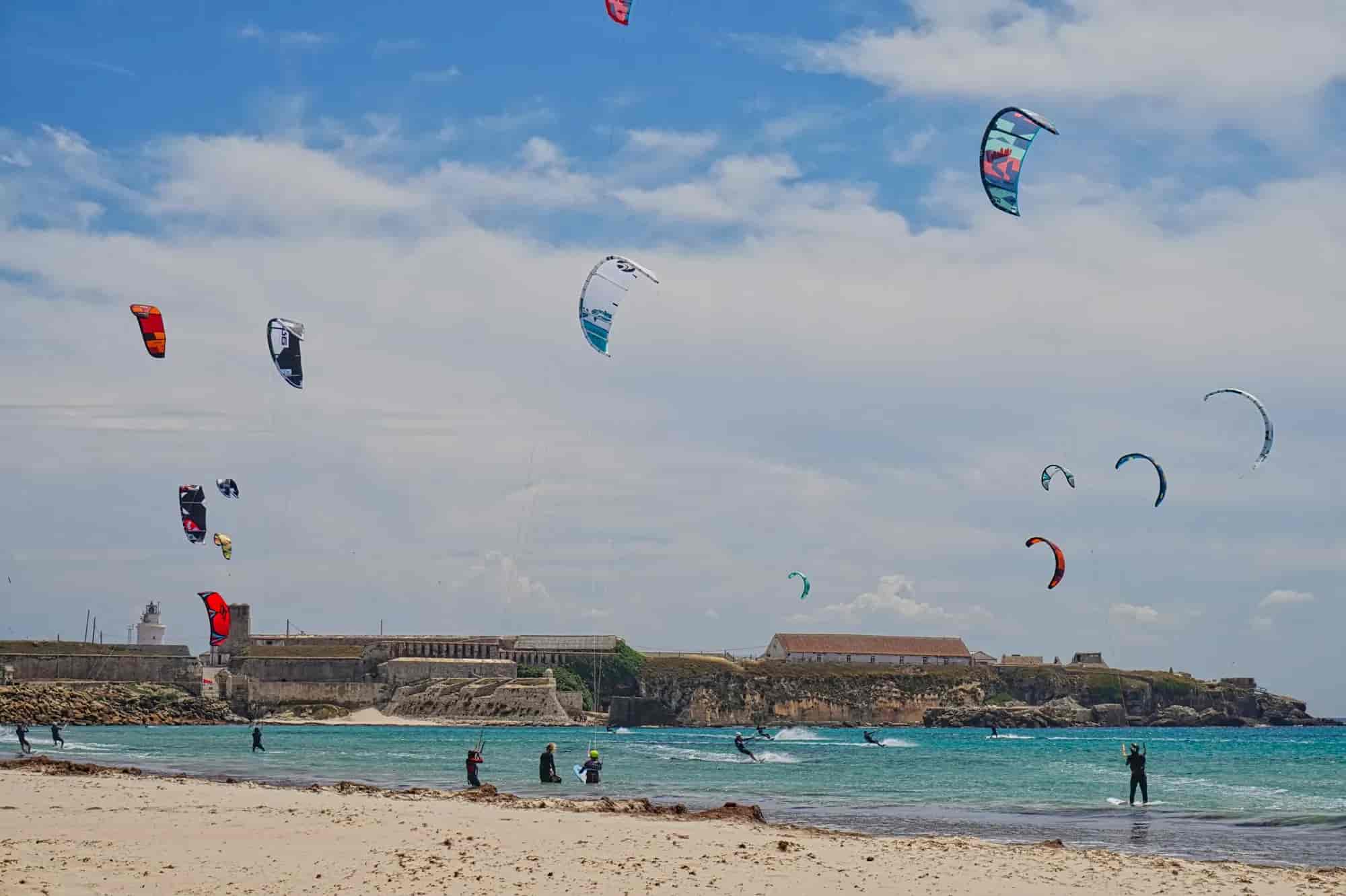
Levante plan: Valdevaqueros is the classic beach for kiting and windsurfing in this wind. To sunbathe without eating sand, look for sheltered corners such as Playa Chica or the pine woods, or use the day to see the old town.
Poniente
- It blows from the west, off the Atlantic: a cooler, more humid wind that takes the edge off the summer heat.
- It tends to be steadier and more moderate than the levante.
- It brings Atlantic swell and, in the colder months, sometimes cloud and rain.
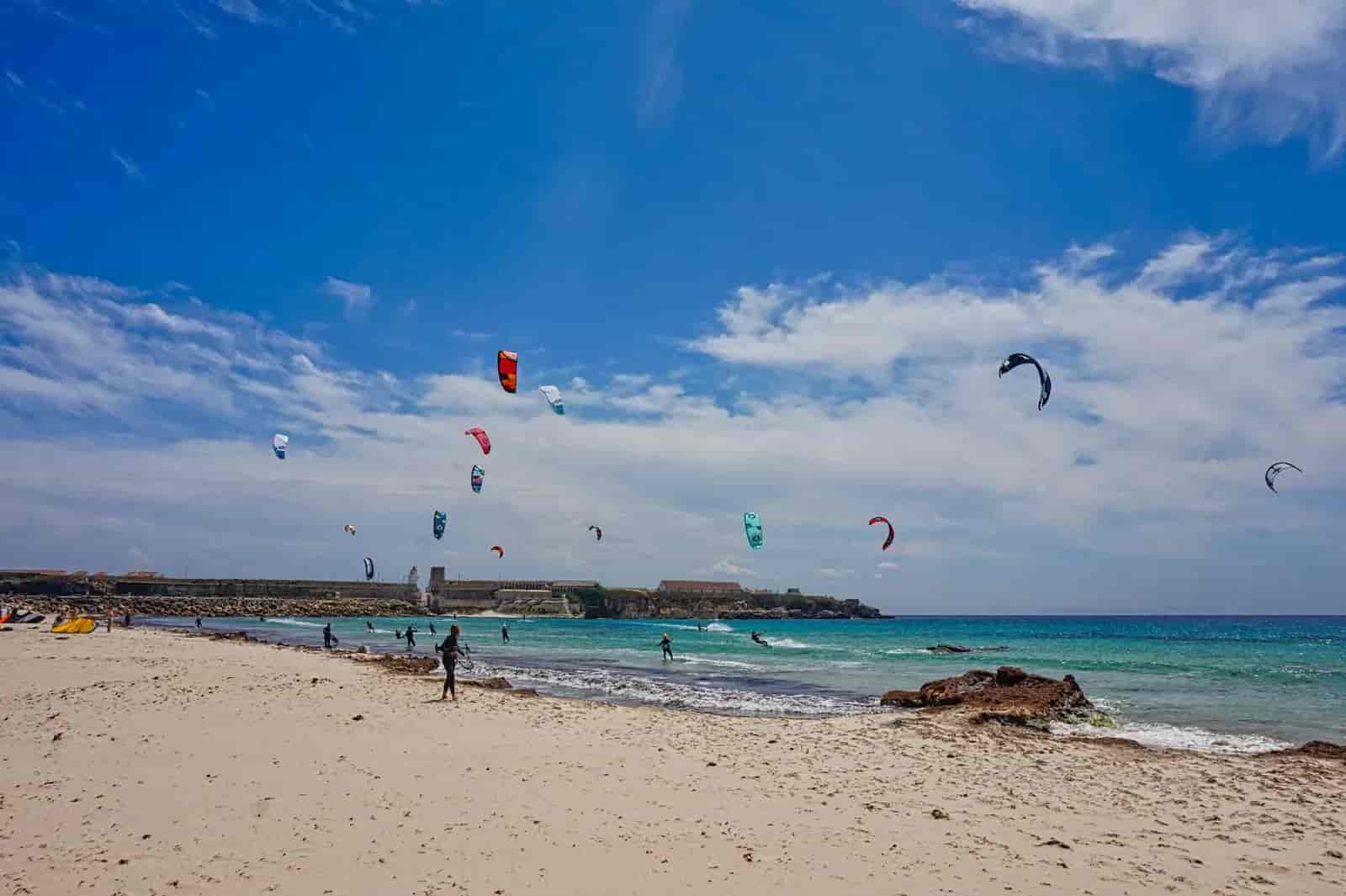
Poniente plan: pleasant beach days at Los Lances and Bolonia, with mild temperatures. Kiters use it too, especially at Los Lances.
Calm
Windless days do happen and are the best for paddleboarding, snorkelling, whale watching and climbing the Bolonia dune without being sandblasted.
How to tell what you are getting
Check the wind forecast before deciding the day's plan: direction (E = levante, W = poniente) and knots. From about 25 knots, the open beach stops being comfortable.